

What Hair Color Should I Try? Find Your Perfect Shade Before You Dye

What if there was a way to try on a hair color before committing? There is.
If you’re not sure which hair color is right for you, a virtual hair color try-on tool can help you explore your options before making a change. Learn how to choose flattering shades based on your skin tone and undertone, discover hair colors worth trying, and find out how to turn your favorite Pinterest inspiration into a look you can preview on yourself.
How to Choose the Right Hair Color for You
Choosing a new hair color can be exciting, but with so many shades available, knowing where to start isn't always easy. A color that looks beautiful on a celebrity or in a Pinterest photo might look different on you because everyone's natural coloring and features are unique.
Before committing to a new hair dye or hair tint, consider your skin's undertone, eye color, natural hair color, and the type of transformation you want. These factors can help you narrow down your options, but don't feel limited by traditional beauty rules.
Sometimes, experimenting with an unexpected shade is how you discover your favorite look.
1. Consider Your Skin Tone and Undertone
Your skin tone describes how light or deep your complexion is, while your undertone refers to the subtle hue beneath the surface of your skin. Understanding both can help you identify hair colors worth trying.
Warm undertones

Warm undertones often have golden, peachy, or yellow hues. If this sounds like your complexion, consider exploring:
Honey blonde
Golden blonde
Caramel brown
Warm chocolate brown
Copper and auburn
These shades can complement warm undertones and create a harmonious overall look.
Cool undertones

Cool undertones often have pink, rosy, or bluish hues. You might enjoy experimenting with:
Ash blonde
Cool beige blonde
Ash brown
Cool espresso brown
Burgundy and plum
Cooler shades can create an interesting balance with cool undertones, depending on your overall coloring.
Neutral undertones

If your undertone falls somewhere between warm and cool, you may find that a wider range of shades works for you. Consider neutral brown, beige blonde, chocolate, caramel, or balanced copper tones.
These are helpful starting points rather than strict rules. You can wear any hair color you love, and previewing different shades can help you discover combinations you might not have considered.
2. How to Identify Your Skin Undertone
Your skin undertone is the subtle color beneath the surface of your skin. It generally falls into one of three categories: warm, cool, or neutral. Understanding your undertone can help you explore hair colors that complement your complexion and create a more harmonious look.
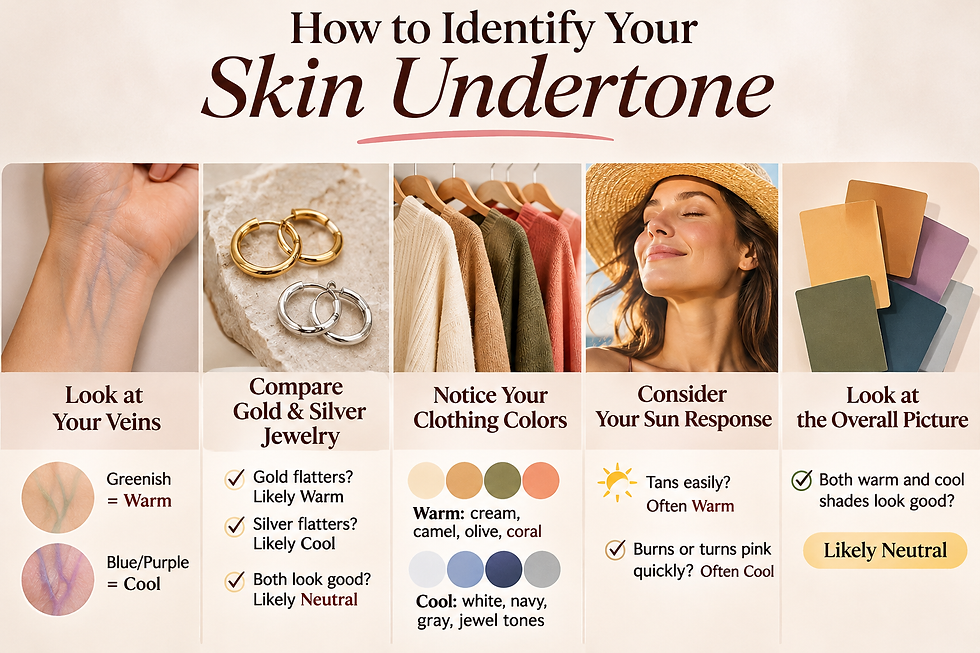
Here are a few simple ways to get an idea of your skin undertone:
Look at your veins. If your veins appear greenish, you may have warm undertones. Blue or purple-looking veins may suggest cool undertones. If it’s difficult to tell, you might have neutral undertones.
Compare gold and silver jewelry. If gold tends to brighten your complexion, you may lean warm. If silver looks more flattering, you may lean cool. If both suit you, you could have neutral undertones.
Notice which clothing colors flatter you. Warm undertones may pair beautifully with cream, camel, olive, and coral. Cool undertones may be complemented by crisp white, navy, gray, and jewel tones.
Consider how your skin responds to the sun. Whether your skin tends to tan, burn, or become pink can offer clues, although sun response alone doesn't reliably identify your undertone.
Look at the overall picture. If both warm and cool shades seem to complement your complexion, you may have neutral undertones.
3. Find a Hair Color That Complements Your Eye Color
Your eye color can offer another source of inspiration when deciding which shades to explore.

Brown eyes: Chocolate brown, caramel, honey blonde, auburn, and burgundy can create beautiful combinations.
Blue eyes: Copper, warm brunette, beige blonde, and golden shades can create contrast.
Green eyes: Auburn, copper, chocolate brown, and reddish tones are worth considering.
Hazel eyes: Caramel, honey, warm brown, and copper can bring out different tones in your eyes.
There is no single perfect match for each eye color. Think of these suggestions as ideas to experiment with rather than rules you need to follow.
3. Decide How Dramatic You Want Your Transformation to Be
Before choosing a new shade, consider how much you want to change your appearance.
If you prefer a subtle refresh, try a color close to your natural shade. A brunette might experiment with chocolate brown or caramel highlights, while someone with blonde hair could explore honey or beige blonde.
If you want something more noticeable, consider copper, burgundy, cherry cola, platinum blonde, or glossy black.
You can also explore balayage, highlights, and ombré if you prefer dimension and variation rather than one uniform color.
Not sure which direction to take? This is where virtual hair color try-on becomes especially useful: you can compare very different looks before deciding which one feels right for you.
Popular Hair Colors to Inspire Your Next Look
If you're still undecided, exploring a few popular hair color families can help you narrow down your favorites.

Chocolate Brown
Chocolate brown is a rich brunette shade that can look glossy, polished, and natural. Depending on the tone, it can lean warm, neutral, or cool.
Consider it if: You want a versatile brunette color with depth.
Honey Blonde
Honey blonde combines golden tones with a warm, luminous finish. It offers a softer alternative to very icy or platinum blonde shades.
Consider it if: You want a golden blonde look with warmth.
Caramel Balayage
Caramel balayage blends lighter caramel tones into a darker base, adding dimension and brightness without coloring every strand the same shade.
Consider it if: You're a brunette who wants a lighter, dimensional look.
Copper and Auburn
Copper ranges from bright, fiery orange to softer, muted shades. Auburn blends red and brown tones for a deeper, more understated take on red hair.
Consider them if: You want a warm color that stands out from traditional blonde and brunette shades.
Cherry Cola and Burgundy
Cherry cola and burgundy combine deep red tones with brunette, wine, or violet undertones. Depending on the shade and lighting, they can look subtle and glossy or more dramatic.
Consider them if: You want a darker hair color with a red or berry-inspired finish.
Creamy Blonde
Creamy blonde includes soft beige, neutral, and golden tones. It can create a softer effect than a very cool, silvery blonde.
Consider it if: You want to explore blonde shades without choosing an extremely icy finish.
Glossy Black
Black hair creates a bold, high-contrast appearance. Options include natural-looking soft black, neutral black, and blue-black for a cooler effect.
Consider it if: You want a striking, darker transformation.
Of course, you don't have to choose from a list. If you have already saved a hair color you love on Pinterest, you can use that image as your starting point instead.
Found Your Dream Hair Color on Pinterest? Try It on Yourself!
Pinterest is full of hair inspiration, from chocolate brunettes and caramel balayage to copper red, creamy blonde, and bold burgundy. You might save dozens of beautiful looks, but there's one question that often remains: How would this hair color actually look on me?
Instead of relying on inspiration photos alone, you can use HairLook to take your favorite hairstyle ideas a step further.
HairLook lets you upload a hairstyle inspiration photo from Pinterest and try the look on your own photo. This means you can start with a specific color or hairstyle you've discovered online rather than choosing only from a preset list of ideas.
How to Try a Pinterest Hair Color With HairLook
Step 1: Find your inspiration.
Browse Pinterest and save a photo featuring the hair color or hairstyle you love. It could be a celebrity's brunette shade, a caramel balayage, copper hair, or a completely different look.
Step 2: Upload your inspiration photo.
Import the hairstyle image into HairLook to use it as the inspiration for your virtual transformation.
Step 3: Try the look on your photo.
Use HairLook's try-on feature to preview the inspired look on yourself and explore how it might suit your appearance.
Step 4: Compare your favorite looks.
Experiment with different inspiration photos and compare the results. You might discover that a shade you hadn't originally considered becomes your new favorite.
This is especially helpful when you have a specific hair color in mind but aren't sure whether to choose warm chocolate or cool espresso, honey blonde or creamy beige, or copper or auburn.
Why just save hair inspiration when you can try it on yourself? Explore your favorite looks with HairLook app before committing to a new hair dye or tint.
Keep in mind that a virtual preview is a visual guide, not a guarantee of the exact result you'll achieve at a salon. Your starting hair color, previous treatments, hair condition, and the coloring process will all affect the final outcome.
Hair Dye vs. Hair Tint: What's the Difference?
Once you've found a shade you love, the next question may be how to achieve it. You might come across the terms hair dye and hair tint, which are sometimes used interchangeably. The exact meaning of “tint” varies by brand, so it's important to check the product description.
Permanent hair dye is designed to create a lasting color change. It is commonly used for significant color changes or gray coverage. As your hair grows, your natural roots may become visible.
Demi-permanent hair color generally lasts longer than semi-permanent color and gradually fades. Depending on the formula, it can help refresh a shade, add depth, or blend some gray hair.
Semi-permanent hair color deposits color that gradually washes out. It can be useful for experimenting with a different tone, although the result depends on your starting hair color and the product.
Hair glosses and color-depositing products can refresh existing color, adjust tone, or enhance shine.
If you're unsure which option is right for you, discuss your goals with a professional hairstylist. They can help you understand which type of color is appropriate for your hair and the result you want.
Remember that previewing a color virtually and applying a real hair dye are two different things. A virtual try-on helps you visualize the look; it doesn't predict the exact chemical result of a coloring product.
How to Talk to Your Hairstylist About Your New Hair Color
Once you've found a few shades you like, preparing for your salon appointment can help you communicate your ideas more clearly.
Bring your reference photos. Save your favorite Pinterest images and HairLook previews so your hairstylist can see the colors and overall look you're aiming for.
Explain how much you want to change. Tell your stylist whether you want a subtle refresh, more dimension, a warmer tone, or a dramatic transformation.
Discuss maintenance. Ask how often your color may need refreshing and what kind of upkeep to expect. Balayage, all-over color, and major lightening transformations can involve different maintenance routines.
Talk about your hair history. Previous dye, bleaching, and other treatments can affect what is achievable. Be open about your hair's history so your stylist can recommend a realistic approach.
Your virtual preview is a helpful starting point for the conversation, not a guarantee that every detail can be reproduced exactly. Your stylist can help adapt the look to your hair, its condition, and your desired result.
Frequently Asked Questions About Choosing a Hair Color
What hair color should I try for the first time?
If you're new to coloring your hair, consider starting with a shade close to your natural color or exploring subtle highlights. Chocolate brown, caramel, and honey blonde are examples worth comparing before making a decision.
How do I know which hair color suits my skin tone?
Consider your skin's undertone alongside your natural hair color and eye color. Warm, cool, and neutral shades can create different effects, but these guidelines aren't absolute. Previewing several colors can help you discover what you like best.
Can I try a hair color without dyeing my hair?
Yes. A virtual hair color try-on tool lets you preview different shades on a photo without applying dye to your actual hair. This can help you compare ideas before purchasing a product or visiting a salon.
Can I upload a Pinterest hairstyle and try it on myself?
HairLook lets you upload a hairstyle inspiration photo from Pinterest and use it to explore a look on your own photo. This is useful when you've found a specific color or hairstyle online and want to visualize it on yourself.
Can I see what I would look like with blonde or brunette hair?
Yes. With HairLook, you can experiment with different hair color looks using your photo and compare possibilities such as blonde, brunette, copper, burgundy, and black.
Is hair tint less damaging than permanent hair dye?
Not necessarily. The effect on your hair depends on the specific formula, ingredients, application, and whether lightening is involved. Some temporary color products don't require the same chemical process as permanent color, but the product type alone doesn't guarantee that it will be harmless to your hair.
Can I try balayage hair color with HairLook?
Yes! With HairLook, you can explore balayage looks and preview different hair color combinations on your own photo. Try caramel balayage, blonde highlights, or other dimensional color ideas to see how they might look on you before visiting a salon. You can also upload a hairstyle inspiration photo from Pinterest to explore a look inspired by your favorite image.
Can a virtual hair color preview show the exact salon result?
No. A preview helps you visualize a possible look, but it cannot reproduce every factor involved in real hair coloring. Your hairstylist can assess your starting color and hair condition to help set realistic expectations.
Find Your Next Hair Color With HairLook
Choosing a new hair color doesn't have to be a guessing game. Whether you're considering honey blonde, chocolate brown, caramel balayage, copper, burgundy, or glossy black, exploring your options can help you decide which looks appeal to you.
And if you've already found your dream hair color on Pinterest, you don't have to stop at saving the picture. Upload your inspiration to HairLook and explore how that look might appear on you.
What hair color would you love to try next? Turn your hair inspiration into a virtual try-on with Hairlook app and explore your next transformation before making the change.


